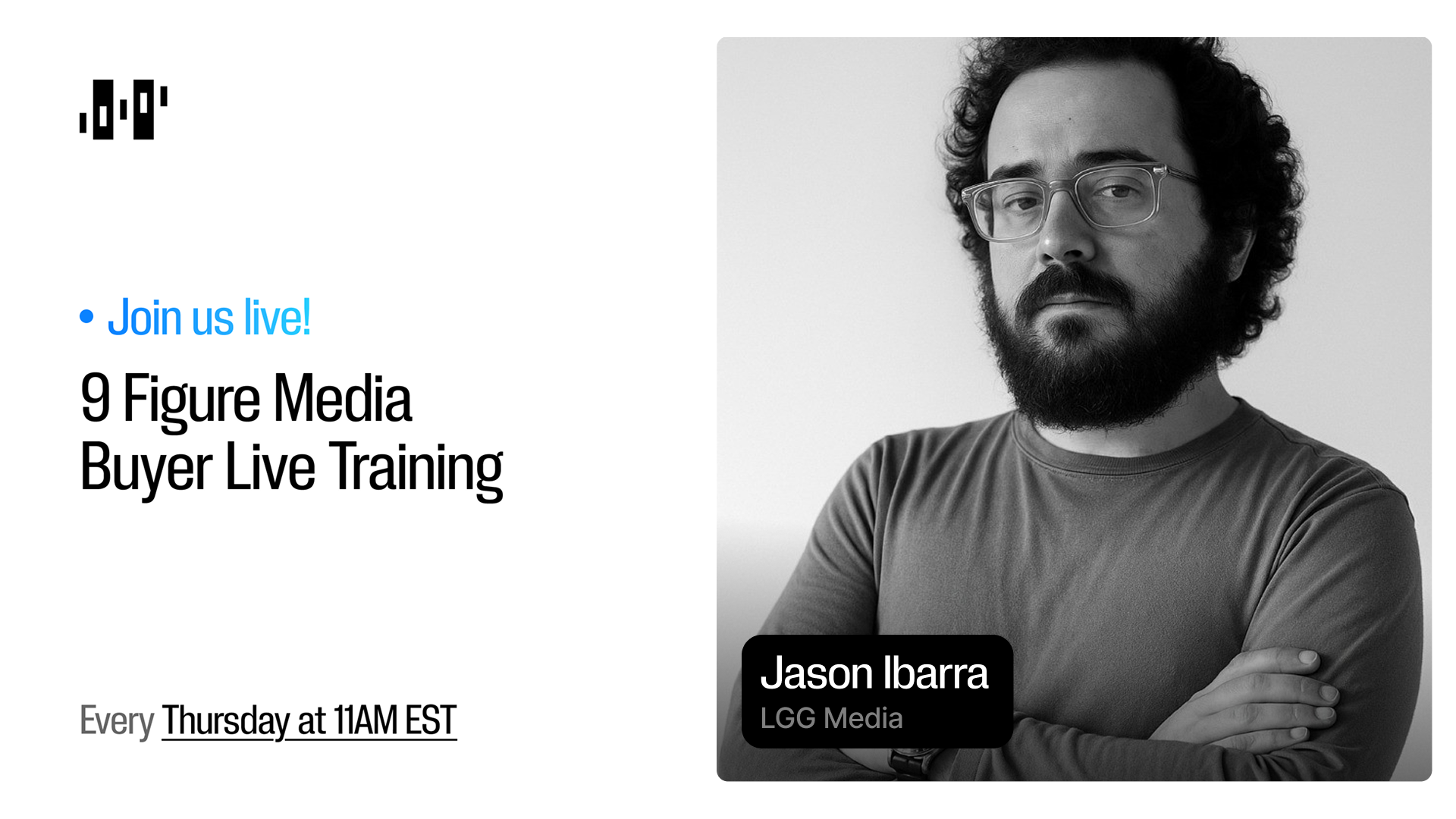
Jason Ibarra from LGG Media pulled up a live HYROS dashboard on Thursday. He broke down how one client went from a $20K a month budget to over $150K a day in ad spend, and answered your questions live. LGG scales client accounts past $150K a day and holds 85 to 95% attribution across every dollar, front end to back. Their average client now spends $526K a month. He went deep on:
How LGG found the real reason a client's close rate was tanking
Why the platform already knows which searcher is worth $5,000
The conversion number the platform says is 30 (it's really 60)
The upside-down way LGG reads a HYROS dashboard
- Why bidding on revenue rewards your lowest-margin sales Our notes below: 1. It wasn't the ads (12:10) Coastal's ROAS started sliding and the client came to LGG certain the ad account was broken. Instead of touching the ads, Jason pulled the dashboard. Time-to-call had jumped from six days to fifteen, so the sales team had quietly stopped working its leads. The ads were fine. The follow-up was the leak. Your ad platform won't tell you that. The full-funnel read will. 2. The platform already knows your $5,000 buyer (24:48) Two people search the same keyword. One is worth $1,000 to you, the other $5,000, and the platform can already tell them apart from the income and history baked into the click. Most lead gen buyers never see the benefit, because they only feed form fills back. Feed real revenue back through HYROS and the algorithm starts hunting the $5,000 version instead of the cheapest click. 3. The real number is 60, not 30 (32:10) The platform tells you it needs 30 conversions a month to learn. Jason's take, from testing and from conversations with people inside the platform: 30 is what they publish so you don't get scared. 60 is what actually trains it. Set your starting budget to hit 60 of whatever event you optimize for, or it never gets enough signal to work. 4. Read the funnel upside down (33:38) Most dashboards start at form fills and hope revenue follows. LGG flips it, revenue on top, then reads down. The move that catches leaks: watch the gap between total sales and attributed sales. If it's tight, nothing is slipping. On Coastal that gap held attribution as high as 95%. Your platform won't show you the gap. HYROS will. 5. Bid on profit, not revenue (41:28) Most teams set their ROAS target against revenue, which quietly rewards high-ticket sales that carry almost no margin. LGG feeds each client's actual margin into HYROS in place of revenue, so a $200 sale with $150 of cost reads as the $50 it really made. The ROAS looks lower, but it's true profit, and the platform starts chasing the deals that actually pay. Revenue bidding flatters you. Profit bidding pays you.
This Thursday, Jason Ibarra from LGG Media goes live! They scale clients past $150K a day in ad spend, hold +95% attribution across all of it, and run an average client at $526K a month. Most accounts train the platform's AI on form fills, so it buys cheap leads that never buy. Feed it real revenue instead and it starts hunting actual buyers. Jason is breaking down the exact system:
How they push collected revenue back to the platform so its AI bids on buyers
The full-funnel read: is it the media buying or the sales process
How they hold +95% attribution across millions in spend
The conversion events they set up in Hyros to track a lead to a closed deal
👉 Register free: Thursday at 11AM EST – The HYROS Team