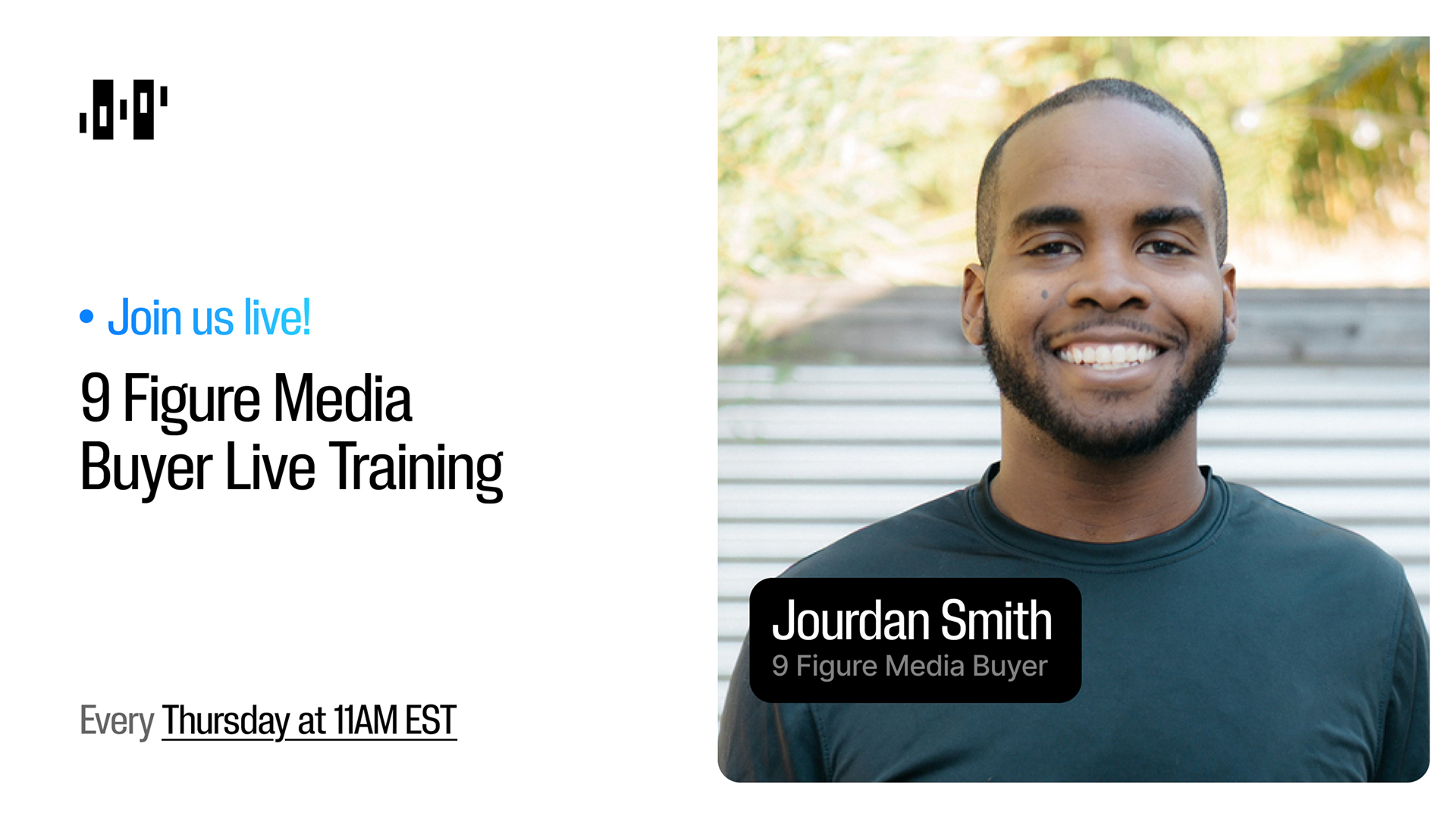
Jourdan Smith connected AI straight to his HYROS data on Thursday, live. He pulled up his reports and handed them to ChatGPT, Claude, and Gemini to read the data so he could make sharper decisions. First time we've shown this on a HYROS Live. Jourdan has managed $35M in ad spend and generated $75M in revenue, for clients like Robert Kiyosaki, Jordan Belfort, and SamCart. He went deep on:
Why scaling this offer to $6-7k a day barely moved his cost per customer
How he reads a HYROS report even he doesn't fully understand
The vague, almost lazy prompt that surfaced his winning ads
Which attribution number he reads first, and why it's the worst-looking one
The fastest way to get HYROS data into AI, and it's not exporting CSVs
Our notes below: 1. He scaled hard and his cost per customer held (15:00) Scaling usually drags your cost per new customer up with it. Jourdan pushed this offer from $500 a day to $6-7k a day and his barely moved. He opened the HYROS Trends report to see why, and his average order value had climbed from $142 to $157 over 90 days. The customer was getting more valuable as he scaled, not more expensive. Your daily numbers hide a shift like that. The HYROS Trends report surfaces it. 2. Even he can't read every report (24:00) HYROS has a lot of reports, and even a buyer with seven years on the platform doesn't fully action all of them. Jourdan likes the cohort report but admitted he never quite knew what to do with it. So he had an AI explain it like he's five and tell him what the data meant for his next move. You don't have to master every report yourself. You have to ask the right question of it. 3. One vague prompt, his winning ads (36:24) Jourdan exported a handful of HYROS reports, dragged them into the model, and typed something almost lazy: tell me about this data. With no other direction, it came back ranking his winning ads by efficiency and flagged a weak one to turn off. No framework, no metrics specified, nothing. The answers were sitting in his HYROS data the whole time. The AI just pulled them out. 4. The attribution number he reads first (08:23) Most buyers pick one attribution model and trust it. Jourdan reads last click first, on purpose, because it shows him the worst case: the floor of what his traffic is actually doing. Then he checks first click to see if he's bringing in new people or just touching ones who would have converted anyway. Last click is your floor. First click tells you if you're actually growing. 5. The fast way to get data into AI (37:39) There are two ways to get your HYROS data into a model. The slow way is exporting CSVs and uploading them, which works but means re-downloading every time you need another column. The fast way is connecting the HYROS API directly, so the model pulls live data and grabs anything it's missing on its own. Start with CSV exports to see what's possible. Then connect the API so you're not clicking through the UI every time.
This Thursday, Jourdan Smith goes live. He connects an AI straight to his HYROS account and lets it read his reports. He still makes the calls on what to scale and kill. Jourdan has managed $35M in ad spend and generated $75M in revenue, for clients like Robert Kiyosaki, Jordan Belfort, and SamCart. You've got the data. Turning it into decisions fast is the hard part. He's breaking down the full workflow:
The reports he opens first, and how he reads them
How to drop a report into AI and get a clear read back
How to connect AI to your HYROS data live, with no code
The questions he asks to decide what to scale and kill
👉 Register free: Thursday at 11AM EST – The HYROS Team